
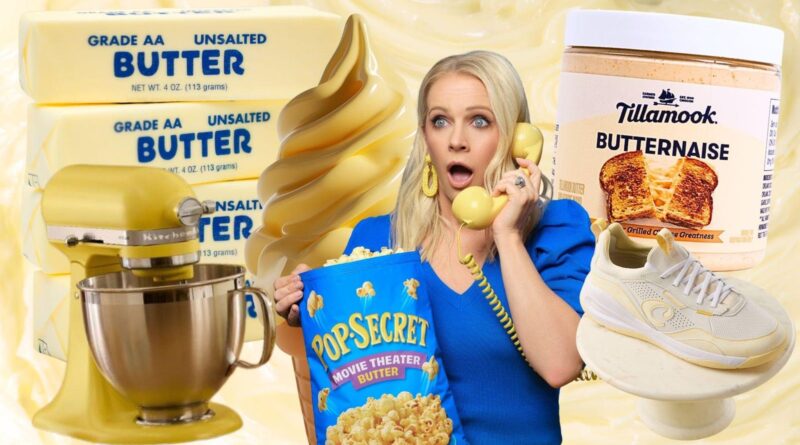
Why butter has become the most unexpected food trend of 2025
In a year of rising food prices, butter has become the year’s most unlikely trend—not despite economic pressure, but because of it. Here’s how a glut of dairy products has fueled viral marketing campaigns and made butter a symbol of affordable luxury.
In 2025, butter from the basic pantry has become a cultural phenomenon. Behind the brand activations, sneaker collaborations and viral ice cream lies a story about the dairy economy, nostalgia and what consumers crave in uncertain times.
Pop Secret has a butter boss. It’s Melissa Joan Hart and she wants you to call the hotline and confess your secrets. Land O’Lakes has dropped a butter yellow sneaker in collaboration with footwear brand Clove. Tillamook teamed up with Kewpie to create a “Bternaise” — a butter and mayo hybrid for grilled cheese lovers — that sold out in less than 10 minutes.
Last month, Dominique Ansel’s Papa d’Amour New York bakery went viral for its butter-dipped soft serve, where ice cream is dipped in warm French butter and sprinkled with salt — a treat that Stew Leonard’s quickly adopted at many grocery locations. Butter boards, Instagram-friendly charcuterie alternatives, have resurfaced with less power and more communal comfort. Even the edible butter candles that appeared a little earlier in the decade signaled that butter as an aesthetic object, not just a food, continued to attract attention.
But look beyond the marketing gimmicks and you’ll find something deeper. The sudden cultural saturation of butter reflects two colliding forces: surplus moving through the supply chain and a widespread desire for foods that are simple, “real” and emotionally grounded.
Why the demand for butter is increasing despite inflation
Despite rising food prices, consumers are trading up premium butter, choosing affordable indulgences over budget alternatives.
SOPA Images/LightRocket via Getty Images
Butter’s resurgence comes against a backdrop of high food prices, making its new status as the “it” ingredient seem contradictory. The tension is the main thing. Even though forecasts predicted higher prices for 2025, consumers did not trade down; they traded up, only in smaller increments.
This is accessible indulgence in practice – buying premium butter that makes a simple toast or home-baked feel-good perfect.
Market data confirms this trade, but current market conditions are also fueling the fire. While beef prices are elevated and eggs cycle through crisis after crisis, butter prices remain cheap despite inflationary pressures elsewhere in the grocery store.
Understanding the Butter Surplus in 2025
Declining consumption of liquid milk prompted milk processors to maximize butterfat production, creating abundant cream supplies and sustained butter production throughout the country.
Associated Press
Emotional attraction is only half the story; the other half is found in the agricultural economy.
Americans drink far less fluid milk. This decades-long decline forced the dairy industry to turn around. Farmers and processors shifted their focus from milk to maximizing the production of butterfat, a key ingredient for higher-demand products such as cheese and butter.
The result, according to recent USDA Dairy Market News reports, is steady milk production and consistently high butterfat levels, creating a generous national supply of cream.
Processors continue to run at or near capacity, with the cream widely available in most regions. The supply is strong enough to keep butter production stable throughout the year.
The result is a market of undeniable abundance. When companies are sitting on so much inventory, the seasonal demand for baking is not enough to cover them. They must create new reasons to consume, which explains the sudden increase in partnerships with high-concept brands.
Nostalgia and the meaning of butter yellow
KitchenAid’s selection of the Color of the Year signals how butter became a visual and culinary symbol of mid-century domesticity and abundance.
Corbis via Getty Images
In February, KitchenAid named Butter Yellow the Color of the Year. The hue evokes a mid-century household: umacart tops, vintage refrigerators where the butter came in a covered bowl and stayed on the counter. It is a color that signals comfort, tradition and a specific vision of the home.
What makes this moment remarkable is not only that a major appliance brand chose butter yellow, but also that the color appeared simultaneously in design and food. Aesthetics and ingredients reinforce each other, creating a feedback loop in which butter becomes both a visual and culinary sign of a certain kind of abundance.
How brands benefit from the trend
Pop Secret tapped into ’90s nostalgia, Land O’Lakes turned packaging into streetwear, and Tillamook validated viral food hacks—each brand found its cultural sweet spot.
Pop Secret
When economic opportunity meets cultural momentum, brands move quickly. Pop Secret tapped into ’90s nostalgia by naming Melissa Joan Hart — Sabrina herself — its first “Chief of Butter,” complete with a confessional hotline that turned butter into theatrical content. Land O’Lakes went straight to Americana and released a limited edition sneaker that turned its iconic butter packaging into wearable mainstream comfort. Tillamook leaned into viral food hacks with Butternaise, doing what grilled cheese lovers were already doing at home — and selling out in minutes. Dominique Ansel’s butter ice cream delivered on every level of social media demand: photogenic, nostalgic and just fresh enough to document.
The lipstick effect comes to the pantry
Like lipstick during an economic downturn, butter has become an affordable luxury—offering abundance and comfort when beef and eggs feel increasingly out of reach.
ghettos
Butter’s elevation is not an isolated event; follows the familiar pattern of how modern trends in food are built. Foods are moving from functional ingredients to identity markers—the same trajectory that turned olive oil and specialty coffee into the status symbols you display in your kitchen.
In each case, the material properties of food—such as the fat of butter, the creaminess of avocado, or the convenience of canned fish—are overshadowed by what they symbolize.
This reflects what economists call the “lipstick effect,” a phenomenon first observed during the Great Depression, when sales of cosmetics increased despite the economic collapse. The term was later coined by Leonard Lauder, then chairman of Estée Lauder, who noticed an increase in lipstick sales after the 2001 recession. The theory is that consumers turn to affordable luxury in uncertain times as small acts of self-care and control.
In the kitchen, butter now plays this role. With beef prices elevated and eggs going through crisis after crisis, the butter market is surprisingly affordable. Butter offers something rare: unapologetic abundance. It’s one of the few indulgences that seems attainable and justified—a full-fat yes in a landscape of expensive nos.