
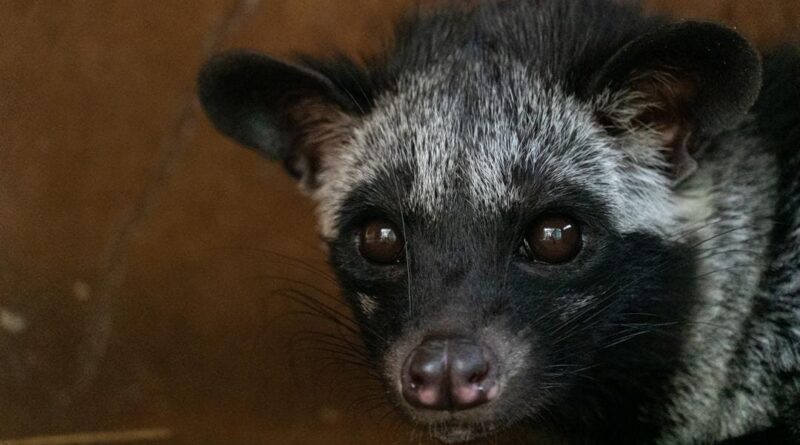
The complexity of civet coffee goes beyond your palate
Civet coffee is highly prized for its unique flavor and rarity, but consumption comes with ethical questions. Wildlife smuggling routes exist throughout Asia as well as criminal smuggling enterprises in general. Profiteers want to make as much money as they can, so the same routes used by narcotics and fraud center operatives are used to traffic helpless animals like civets. The civet coffee habit supports this interconnected network.
Misery on every level
Sustainability is not a concept in the civet coffee industry. For wild civet coffee, clearing civet droppings disrupts natural seed dispersal patterns. Wild civet coffee comes from scavenged droppings and in theory won’t harm the animal at all, but the wider ecological disruption should be investigated, the researchers suggest.
For farm civet coffee, every part of the animal’s experience is suffering. There is a direct link between your preference for civet coffee and the ills of poaching in Southeast Asia. Specially designed traps catch an unsuspecting civet and if it survives the trap, it is tied up by a smuggler who transports it abroad.
Civet trap.
Wildlife Alliance
If the goulash does not survive the trap, then it can be eaten. Bushmeat in various forms is common in this part of the world. Around 2014, our team observed an increase in the overall demand and price difference between live and dead civets, which was caused by civet coffee farms in neighboring countries. Bushmeat prices remained unchanged, but the price of live civets increased significantly.
Civets saved from a smuggler. From the moment of capture, these animals are kept in torturous conditions.
Wildlife Alliance
Civet farms in Vietnam claim that the animals they use are bred in captivity, but we know firsthand that the smuggling of civets into Cambodia is supported by this industry. Once the coffee civet arrives at its facility, it will live in prison, forced to eat as many coffee cherries as its tiny body can process. In the wild, these animals would have a balanced diet of mangoes and insects; they will have the entire continuous landscape of the Cardamom Forest as their home. From a life trap in the jungle to a cog in a factory farm.
We know from the Wildlife Rescue Team (formerly run by our organization under the Royal Government but now directly managed by the Department of Agriculture, Forestry and Fisheries) and its 20 years of thwarting traffickers that our efforts have made a quantifiable difference. At the same time, we realize that demand reduction and better awareness will be an effective method in the short term; the situation has improved, but smuggling is still a problem. We can compare a region with our neighbors where you can still find bushmeat on restaurant menus and reflect gratefully on the progress that has been made in Cambodia while appreciating how much more can be achieved. Past successes can only be motivation for further work while this struggle continues.
Civet Snare baited with pineapple.
Wildlife Alliance
Scams abound
Natural civet coffee production is limited by civet populations and the amount of coffee beans they can eat, and unfortunately there are only so many wild civets left. Less every day because more and more are being poached. While coffee beans may make up the majority of civet diets in coffee-growing areas, demand outstrips supply, leading to a number of problems. Civet coffee beans can sell for hundreds of dollars per kilogram, and with these margins, abuse is inevitable: pretending regular coffee is civet coffee, cutting regular beans and civet coffee to stretch the supply, and mislabeling farmed civet coffee as wild civet coffee are established tactics. Scientists propose using chemical analysis (“eNos”) to distinguish the real stuff from fraudulent concoctions. Even when a coffee lover enjoys authentic civet coffee, they have to wonder how it was made and what suffering was caused to the animals in the process.
A consumer can be told that they are buying from a regulated farm, only to have this turn out to be incorrect and for subsequent investigations to show that the farm in question was force-feeding civets like foie-gras geese, themselves smuggled by international traders. The stakes are too high: civet coffee and misery are fundamentally intertwined. Unfortunately, since poaching, human trafficking, and force-feeding are all part of farmed civet coffee, it’s not so easy to ensure that your blend comes from a “humane” source.
We are one step closer to enjoying cruelty-free civet coffee
What’s the hope of enjoying this less bitter, chocolaty, naturally sweet option without offending your conscience? Reproduction of the process in a bioreactor. If scientists can identify the unique chemical makeup of this coffee and the biological processes that create it, everyone can enjoy endless pseudo-civet coffee guilt-free and much cheaper. This research has been going on for years and is paying off. A recently published study in Nature analyzed samples of civet scat and regular coffee beans from the same region to better understand what chemical differences explain the popular and unique taste of Kopi Luwak (civet coffee).
It was previously thought that the civet’s digestive tract must change the chemical composition of the coffee beans through some kind of fermentation, but the details of this remain elusive. In this study, researchers analyzed samples from the Western Ghats biodiversity hotspot in Kodagu, India, and compared unroasted beans and scat samples collected from the jungle. Sampling was carried out during the peak fruit harvest in January 2025 to ensure the collection of ripe, high quality berries and droppings. The study builds on the work of others, but provides key insights into a previously undiscovered biomolecular profile of civet coffee, showing a higher fat content, particularly with increased amounts of caprylic acid methyl ester and capric acid methyl ester. As the study authors explain, these two fatty acid compounds serve as flavoring and flavoring agents in foods, often imparting a milky or milky aroma and taste. The increased levels of protein, caffeine and specific acids in civet beans can be attributed to digestive and fermentation processes, Gluconobacter the genus of bacteria in the civet gut plays a key role.
This research provides more details for ongoing efforts to humanely reproduce this delicacy, but the work must continue. These researchers make recommendations for further research: analysis of arabica bean samples (this study used robusta), further investigation of amino acid profiles, and comparison of roasted and unroasted samples to see what difference roasting makes to the final product. They go on to say that research should be done on the long-term effects of drinking civet coffee, as well as comparing samples from different geographic areas and ecological conditions, such as the diversity of shade trees and canopy cover. When comparing environmental factors with chemical composition, these factors could reveal meaningful ecological-chemical relationships.
where do we stand This study and previous work build on the achievement of great progress towards the eventual goal of enjoying excellent coffee without participating in animal cruelty. This market currently supports transnational criminal networks, and removing this driver of civet smuggling will protect ecological integrity while disrupting the smuggling networks that profit from the animal trade.