

AI Google is the “worst” for content theft, says People CEO | Luck
When Google became a dominant search engine around 2004, not everyone was happy. All of the book publishers fired the company for helping with the content of the copyright protected without paying. The search giant eventually smoked things, but now, twenty years later, Google has become a villain of the media industry again – this time to absorb the same content and train AI.
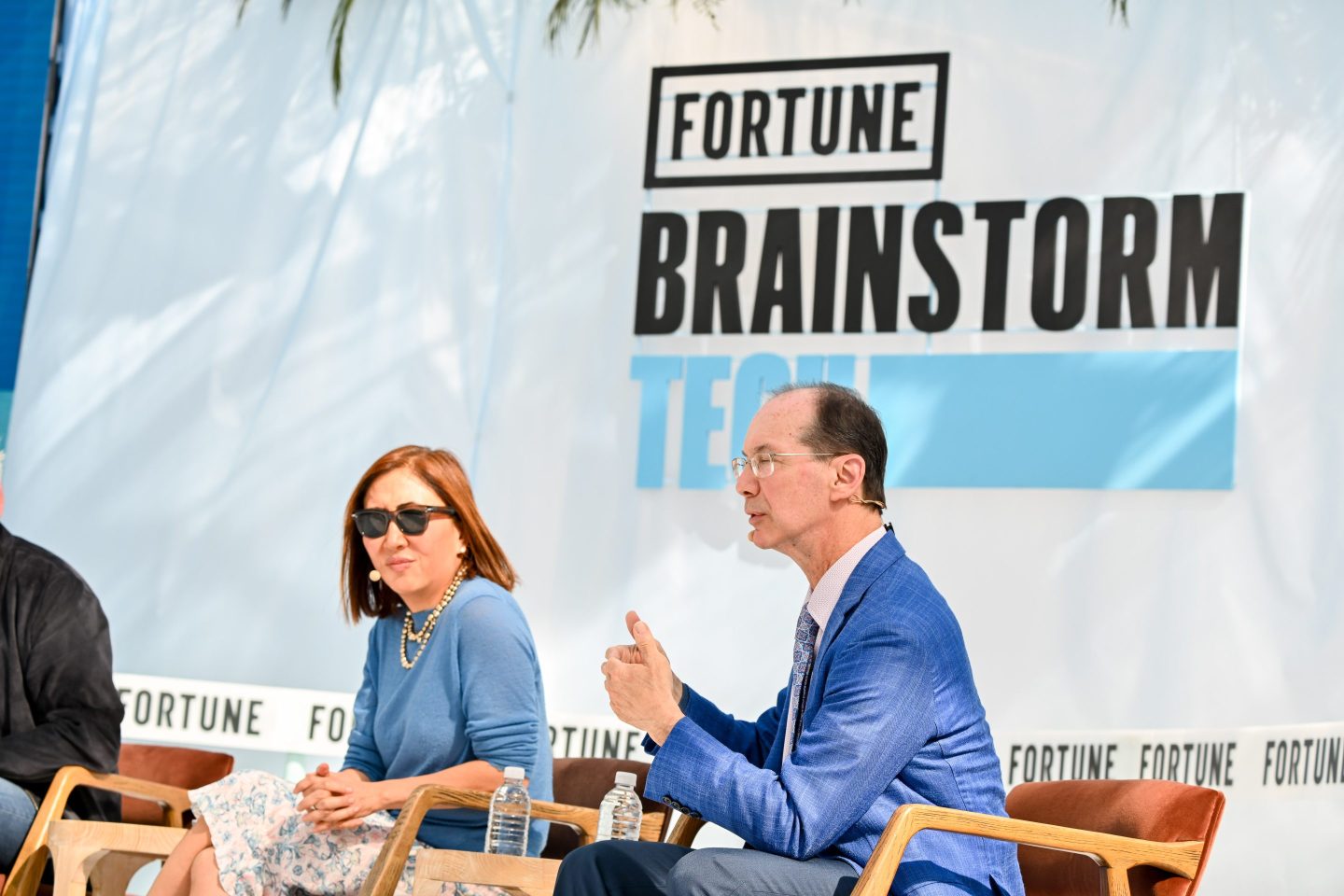
On Wednesday at the Fortune Brainstorm Tech Conference on Wednesday, People Inc. CEO Neil Vogel -Whose Companies include people and food and wine -sid other big pays to use the content they create, but that Google was rejected.
“Some AI stores are good actors. Open Ai is a good man,” Vogel said. “The worst person is Google.”
Vogel has made his comments during the panel discussion on the stage of the future of digital media in the new Internet. Comments are coming, because the publishers of news and news publishers are coping with AI companies at the table and in the courtroom. The New York Times sued Openai and claimed that he had trained his chatbots on his content with his consent or payment. Openai called the suit irrelevant.
Cloudflare CEO, Matthew Prince, who was on Wednesday’s Brainstorm panel, said it was much harder for the website to attract traffic at a time when AI serves as “responsible engines” that provide what people are looking for in rapid snippets.
The Prince noted that Google had served as a “big boss” on the Internet in the past by using the content of the website to display links to this site responsible for people’s search questions. This layout of direct traffic on the company’s website and offers them a chance to make money from visitors.
Today, this traffic often provides all the information that users need. Google is one of those who add answers to AI based on information cracked from the company’s website, but unlike the traditional AI search results, you provide the same operation on the website – Vogel management to ensure that publishers have already traded digital dimes, and now traded with these pension AI.
In the case of other large AI companies, the publishers have gained a certain leverage by working with companies such as cloudflare to cut off the so -called search engines that read and enjoy their content. In the case of Google, however, it has proved to be a viable option, because the AI search engineer is the same as to display search results. The publisher’s intention should prevent AI Machine Google to go through its content, and also had to sacrifice its discovery in search.
Vogel noted that while Google search brings people less traffic on the website than in the past, they still represent between 25-30% of visits, so it is financially unable to cut off the company’s search. He added that some AI companies have already agreed to pay the content creators – including the anthropics that have achieved a $ 1.5 billion book publishers this month – and that Tersrs are actively working on a similar arrangement. The exception is Google, who dubbed the “bad actor”.
Google refused how we were Vogel’s note.
YouTube model as a possible solution
Contemporary contrasts over Google and other use of others and have strong echoes of the early Internet era. This era -a Google -Mild also offered solutions. Bill Gross, influencing an early internet character attributed to the pioneering business model of paid advertising advertising and is now the founder and publisher of Vrata.ai, points out what happened to YouTube that Google won in 2006.
Stuart Isett/Fortune
In their early days, outrageous content creators on YouTube, such as musicians and film studios, pirate content enables users. This triggered a number of court disputes, but in time youtube joined the compromise: This would give the creators the opportunity to monetize their content through advertising. This solution has proven to be functional and mutually for more than ten years – Choogle says he has paid more than $ 12 billion in shared rights for rights since December 2024 – and Gross says he can work as well for AI Era.
“The right way to solve it is not with court buckles, but with license fees,” said Gross, whose company offers the possibility of monetization related to AI. “It opens incentives to create lots of new content.”
The Prince was even more bull and predicted the “golden age” where AI companies would provide annual payments to those who created unique and valuable content. Quoted recent agreements in which OpenIa agreed to pay New York TimesReddit and others.
But not everyone is optimistic that the ai era will be an improvement. Janice Min, CEO of Ankler Media, says that in the last two decades they have shown that large technological platforms like Google and Facebook can create an organization that benefits publishers – but that they suddenly tear off ASY.
“I don’t see any benefits for AI partnership,” said min. “I see a technical story that happens over and over again. They come and offer you money and it’s hard not to say not shiny things.”
Min says that the ankler has blocked all AI search engines and adheres to its strategy for building a media business surrounded by paid newsletters and restorating content.
(Tagstotranslate) advertising